

Archaeologists have been investigating the ruins of the Saastna chapel on the shore of Matsalu Bay for the second summer in a row. The chapel was known across a wider area of the Baltic Sea region and was visited by people from Gotland and Courland as well.
Today, Saastna, on the shore of Matsalu Bay, forms part of the mainland as a result of post-glacial land uplift, but in the Middle Ages it was an island.
It is not known when the chapel dedicated to St. Olaf was built there. The earliest finds previously recovered from around the chapel date to the 15th century, but these alone do not allow the construction date of the building itself to be established with certainty. Measuring six by sixteen metres, the chapel is large in the context of Saastna, according to archaeologist Anton Pärn.
“Looking at this small island and considering that only 13 families lived here in the 16th century, we can say with considerable certainty that this chapel had a much greater significance than merely serving the local population,” Pärn said.
The chapel was dedicated to St. Olaf, suggesting a probable connection with seafarers of Scandinavian origin. Archaeologist Heiki Valk said that Saastna’s location beside an international maritime route of the period probably contributed to the chapel’s wider renown. Both coin finds and written sources indicate that there was a tradition of offering coins here, and the practice continued for as long as two hundred years after the Reformation, by which time the chapel itself was already in ruins.
“According to church visitation records and reports, people came here from Gotland, Courland, Saaremaa, and from all around the region,” archaeologist Heiki Valk said.
Archaeologist Anton Pärn said that something earlier may lie beneath the medieval stone chapel, although this still needs to be investigated.
“Initially, we thought that there was only the stone chapel, but we have now found some indications that a log structure or another wooden building may have stood beneath it,” Pärn said.
The work at Saastna is part of the project “From Nidaros to Novgorod,” which focuses on the study of maritime routes and harbour sites. The project is supported by Norway and led by Tallinn University, with partners including the University of Tartu and the Haapsalu and Läänemaa Museums Foundation.
Editor: Barbara Oja
Source: “Aktuaalne kaamera”
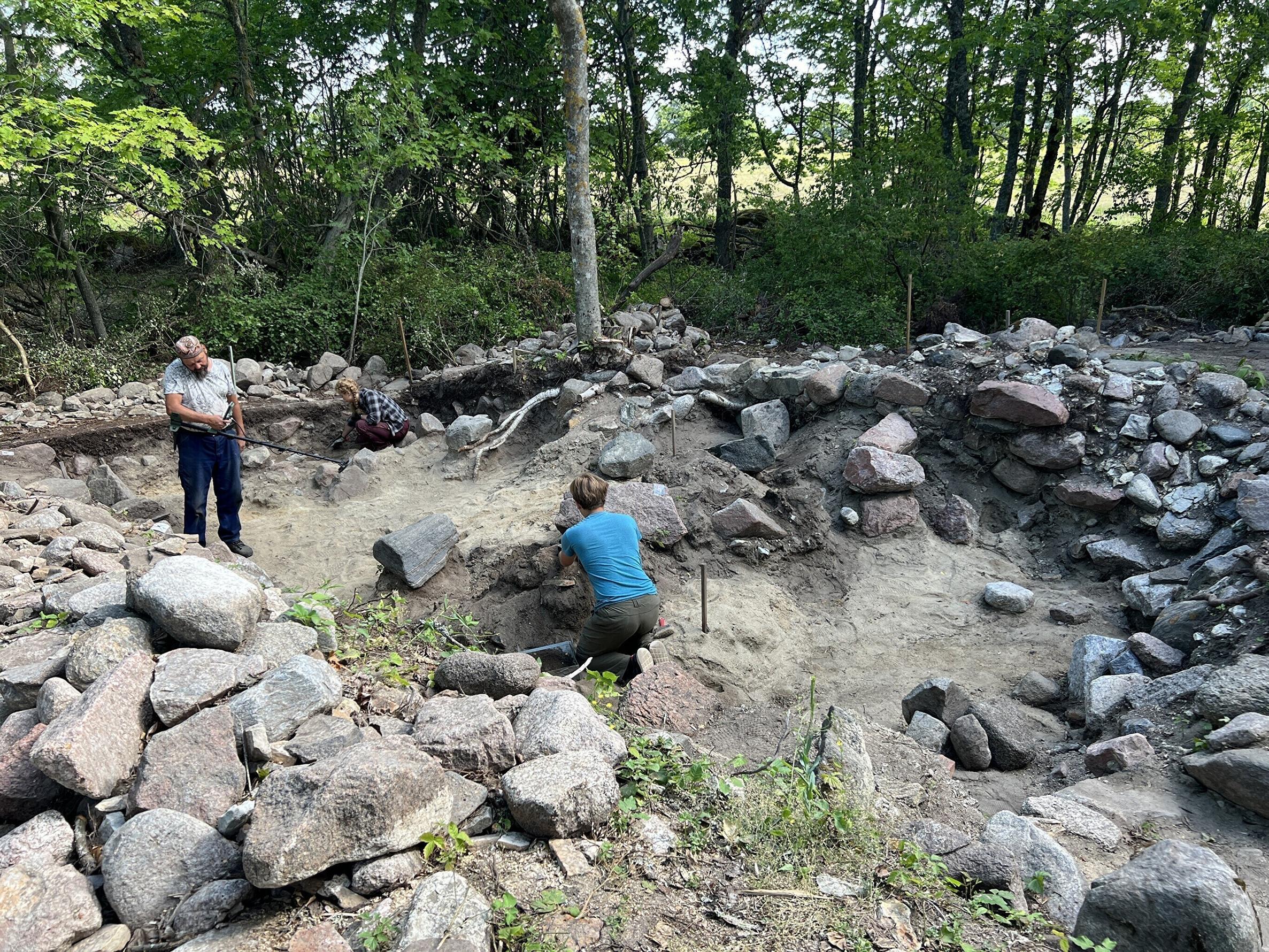
Archaeologists investigating the stone chapel at Saastna. (Photo: Juhan Hepner,/ERR)