

Reti Meema, Saarte Hääl
The St. Olav Foundation, one of whose aims is to develop a pilgrimage route known as the St. Olav Way from Estonia to Trondheim, also plans to incorporate Saaremaa into the route.
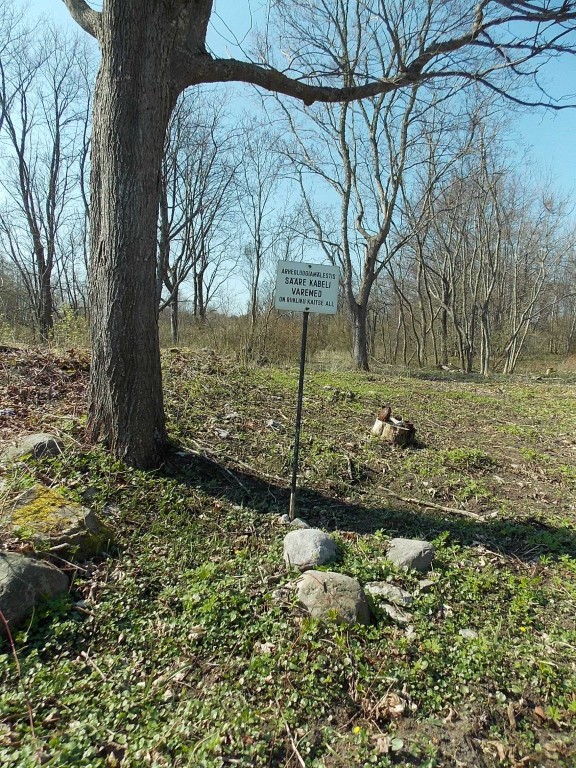
The Foundation aims to develop the St. Olav Way so that it begins at Sääre Chapel in Sõrve, Saaremaa—which in the past was probably also dedicated to St. Olaf—and ends at St. Olaf’s Church in Tallinn. “The route should include Vormsi and its St. Olaf’s Church, Saastna Chapel near Lihula, Nõva, if possible both Pakri Islands, probably Padise Monastery, and, of course, St. Olaf’s Church in Tallinn,” explained Risto-Pearu Koovit, Chairman of the Management Board of the St. Olav Foundation.
According to Koovit, the Foundation has so far enjoyed excellent cooperation with both the leadership of Saaremaa Municipality and those responsible for tourism and marketing. “This would clearly provide Saaremaa with a new and exciting tourism attraction, particularly appealing to Norwegians, who currently make up only a relatively small proportion of visitors to the region,” he said.
Anu Lomp, head of Visit Saaremaa, said that work is currently underway to develop the concept of the St. Olav Way and determine its possible route. She added that local residents have also proposed giving the Saaremaa section a name that better reflects the island’s own identity.
Lomp noted that she herself has travelled along pilgrimage routes in Spain and Portugal, where there are large numbers of walkers, well-developed waymarking and good infrastructure. Pilgrims make a major contribution to tourism in these regions, as the routes attract hundreds of thousands of people from around the world.
“Although it is called a pilgrimage route, people do not travel it solely for religious reasons. They may want to be more physically active, spend time in nature, relieve mental stress, find inner peace, escape the noise of everyday life, express gratitude or cope with worries, among many other reasons. There are countless motivations for setting out on such a journey, and hiking in nature is an increasingly popular trend,” Lomp said.
Saaremaa Municipality therefore sees considerable potential in attracting people interested in pilgrimage routes to Saaremaa and Muhu to experience everything the islands have to offer. “Being part of a larger international network gives us greater visibility and creates interest in coming here to walk the route as well,” Lomp said.
The St. Olav Foundation was established by five people in December last year. The St. Olav Way has since become part of the Council of Europe’s international Cultural Routes programme. By 2023, 47 Cultural Routes had been established, extending across 60 countries within and beyond Europe and illustrating the closely intertwined histories of European countries, as well as Europe’s shared heritage and cultural diversity.
To develop the St. Olav Way in Estonia, the St. Olav Foundation has joined the ACSOW (Association for the Cultural Route of St. Olav Ways) network. The network includes nine routes in Norway, routes in Sweden and Denmark, and waterways in Finland.